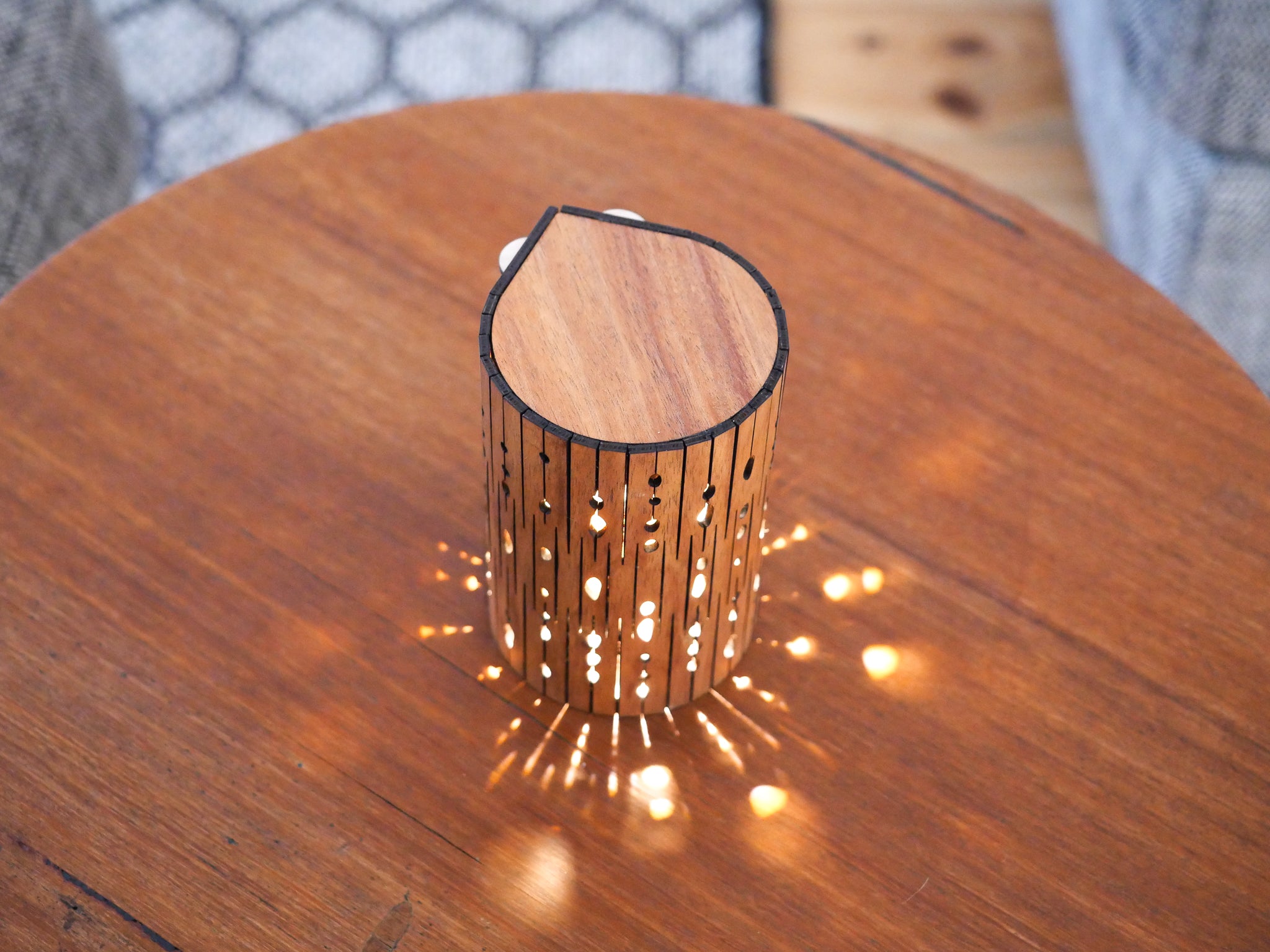
Choosing between a cordless table lamp and a traditional plug-in lamp often comes down to a simple question: where do you want the light to go?
Plug-in table lamps have long been a familiar choice for bedside tables, desks and living spaces. But cordless table lamps offer something different — the freedom to place light where you want it, without needing to arrange the room around a power point.
Both have their place. Here’s what to consider when deciding which is better for your home.
What is a cordless table lamp?
A cordless table lamp is a portable light that operates without being continuously connected to a wall outlet. Rather than having a power cord running from the lamp to a nearby socket while it is in use, it can be picked up and moved from one setting to another.
That flexibility makes cordless lamps particularly useful in spaces where access to power points is limited, or where you simply want a cleaner, less permanent lighting arrangement.
They can work on a bedside table one evening, move to a dining table the next, or provide a pool of ambient light in a quiet corner of the room.
Cordless vs plug-in table lamps
The main difference is straightforward: a plug-in lamp is tied to a power point, while a cordless lamp gives you greater freedom over placement.
That distinction can have a surprisingly large effect on how you use lighting at home.
Placement
A plug-in table lamp generally needs to sit within reach of an outlet. Depending on the room, that can influence where furniture is positioned and where the lamp can realistically be used.
A cordless lamp removes that constraint.
It can sit in the middle of a dining table, on shelving without a convenient outlet nearby, or on a side table without a visible cable running across the space.
For homes where layouts change regularly, that flexibility can be especially useful.
Portability
A traditional table lamp usually becomes part of a particular area of the home. Once it has been positioned and plugged in, it tends to stay there.
A cordless table lamp is inherently more portable.
Rather than thinking of it as lighting for one particular room, you can use it wherever additional light or atmosphere is needed.
This makes portable lighting well suited to homes where spaces serve more than one purpose throughout the day.
Visual simplicity
Power cables are practical, but they can also add visual clutter.
If you prefer a quieter, more considered interior, removing the visible cord can make a table setting or surface feel simpler.
This is particularly noticeable on dining tables, open shelving and furniture positioned away from walls.
A cordless lamp can become part of the setting itself rather than appearing connected to the architecture around it.
When is a plug-in table lamp the better choice?
Cordless does not automatically mean better.
A plug-in table lamp can make more sense when you want a light to remain permanently in one location and have easy access to a power point.
For example, a lamp that lives permanently on a desk or bedside table may not need to move at all. In these situations, the flexibility of a portable lamp may be less important.
The question is not simply which type of lamp is better overall, but which suits the way you use the particular space.
When does a cordless table lamp make more sense?
A cordless lamp becomes particularly useful when flexibility matters.
You might consider one if:
- you want to place a lamp somewhere without a convenient power point
- you regularly move lighting between rooms or surfaces
- you want light in the centre of a dining table
- you prefer fewer visible cables
- your furniture layout changes depending on how a room is being used
- you want a portable source of ambient light rather than a permanently positioned fixture
In these situations, portability becomes part of the function of the lamp rather than simply an added feature.
Are cordless table lamps good for small spaces?
They can be particularly useful in smaller homes and apartments, where furniture often needs to perform more than one role.
A dining table might also be a workspace. A side table may move depending on how the living room is arranged. A lamp that can move with those changes can help the space remain adaptable.
Cordless lighting can also reduce the need to run cables behind or between pieces of furniture simply to bring light to a particular spot.
Instead of designing the arrangement around the location of an outlet, you have more freedom to decide where the light itself makes sense.
Cordless lamps for dining tables
Dining tables are one of the clearest examples of where portable lighting can be useful.
A conventional table lamp in the centre of a dining table would usually require a visible cable, making the arrangement impractical in many homes.
A cordless lamp can create a more intimate pool of light without the same constraint.
It can also be removed when the table needs to serve another purpose, rather than becoming a permanent part of the setting.
Cordless lamps for bedside tables
Portable lamps can also work well beside the bed, particularly when you want to keep the bedside area visually simple or when access to power points is awkward.
The ability to move the lamp also means it does not have to remain exclusively in the bedroom.
A lamp used beside the bed can become ambient lighting elsewhere in the home when needed.
Think about the kind of light you want
Choosing a table lamp is not only about whether it has a cord.
Consider the role you want the light to play.
Is it primarily practical lighting for a task? Is it intended to create atmosphere? Do you want it to illuminate a particular surface, or simply introduce a softer layer of light into the room?
A portable lamp can be especially effective when lighting is being used to shape the mood of a space rather than simply provide maximum illumination.
The lamp itself also becomes part of the room, so its proportions, materials and form matter alongside its function.
So, which is better: cordless or plug-in?
For a permanent lighting position close to a power outlet, a plug-in table lamp remains a simple and practical choice.
If you value flexibility, portability and freedom of placement, a cordless table lamp offers advantages that a conventional plug-in lamp cannot.
The most useful way to choose is to think about how you actually live with light.
If the lamp needs to stay in one place, a cord may not matter. If you want the freedom to move light between a bedside table, dining setting, shelf or living area, portable lighting can make much more sense.
RS Studio’s Portable Café Lamp, Bubble Lamp and Droplet Lamp offer different approaches to portable lighting for the home, allowing light to become something that can move and adapt with the space.
Frequently Asked Questions
1. Are cordless table lamps worth it?
Cordless table lamps are a good choice when flexibility and portability are important. They can be placed away from power points, moved between rooms and used on dining tables, bedside tables or shelves without a visible power cord.
2. What is the difference between a cordless lamp and a plug-in lamp?
A plug-in lamp needs to remain connected to a power outlet while in use, whereas a cordless lamp can operate without being continuously plugged in. This gives you more freedom to position and move the lamp around your home.
3. Where can you use a cordless table lamp?
Cordless table lamps can be used in many areas of the home, including dining tables, bedside tables, living rooms and shelving. Their portability makes them particularly useful in places where a power point is not conveniently located.
4. Are cordless table lamps good for bedside tables?
Yes. A cordless table lamp can be a practical option for a bedside table, particularly when access to a power point is limited or you prefer a cleaner surface without visible cables. It can also be moved elsewhere in the home when needed.
5. Should I choose a cordless lamp or plug-in table lamp?
Choose a plug-in lamp if it will remain permanently positioned near a power point. A cordless table lamp may be a better choice if you want greater flexibility, fewer visible cables and the ability to move your lighting between different spaces.
Discover Handcrafted Lighting by RS Studio
At RS Studio, every lighting piece is designed to balance craftsmanship, natural materials and thoughtful design. From sculptural table lamps to portable lighting and handcrafted pendants, each collection is created to help shape calm, welcoming interiors through the simple power of light.
About the Author
Rael Solomon is a Melbourne-based designer-maker and the founder of RS Studio. With hands-on experience designing and crafting sustainable timber lighting, Rael combines technical precision with artistic practice to explore how light influences atmosphere, comfort, and emotional connection within a space. All blog content is written from real-world design experience and reviewed to ensure accuracy, relevance, and alignment with current design and sustainability best practices.